Ancient Hair Care Traditions for Healthier Hair
Modern hair care can feel increasingly complicated. Shelves are filled with specialized cleansers, conditioners, treatments, serums and styling products, each promising to solve a narrowly defined problem. Yet many of the basic challenges remain familiar: dryness, breakage, difficult detangling, scalp irritation and maintaining healthy-looking hair.
Long before modern cosmetic chemistry, cultures around the world developed ancient hair care traditions built around comparatively simple materials: plant oils, herbs, clays, botanical preparations, protective hairstyles and deliberate grooming practices.
Not every ancient remedy should be treated as scientifically proven simply because it has survived for generations. But traditional hair care contains an important principle that remains relevant: healthy hair is often the result of consistent care, gentle handling and attention to the scalp rather than constantly chasing new products.

For people with curly, coily, wavy, thick or textured hair in particular, several of these principles translate remarkably well into modern grooming.
What Ancient Hair Care Traditions Can Teach Us
Ancient cultures did not understand the hair shaft in terms of cuticles, cortex structure, surfactants or protein loss. They learned primarily through observation.
They recognized that hair responded differently depending on how it was washed, lubricated, combed, covered, styled and exposed to the environment.
That led to recurring practices across different regions:
- Applying plant oils and fatty preparations
- Using herbs and botanical materials
- Protecting hair from harsh environmental conditions
- Braiding, wrapping or otherwise controlling the hair
- Cleaning the scalp while restoring lubrication afterward
- Treating grooming as a repeated ritual rather than an occasional repair
Modern hair science helps explain why some of these practices can be useful.
The visible hair shaft is composed primarily of keratinized protein. Once significantly damaged, it cannot biologically heal itself like living skin. Good hair care therefore focuses heavily on preventing unnecessary damage, reducing friction and breakage, maintaining manageable hair and protecting the existing fiber.
That distinction gives ancient practices modern relevance.
Ancient Egypt: Oils, Grooming and Environmental Protection
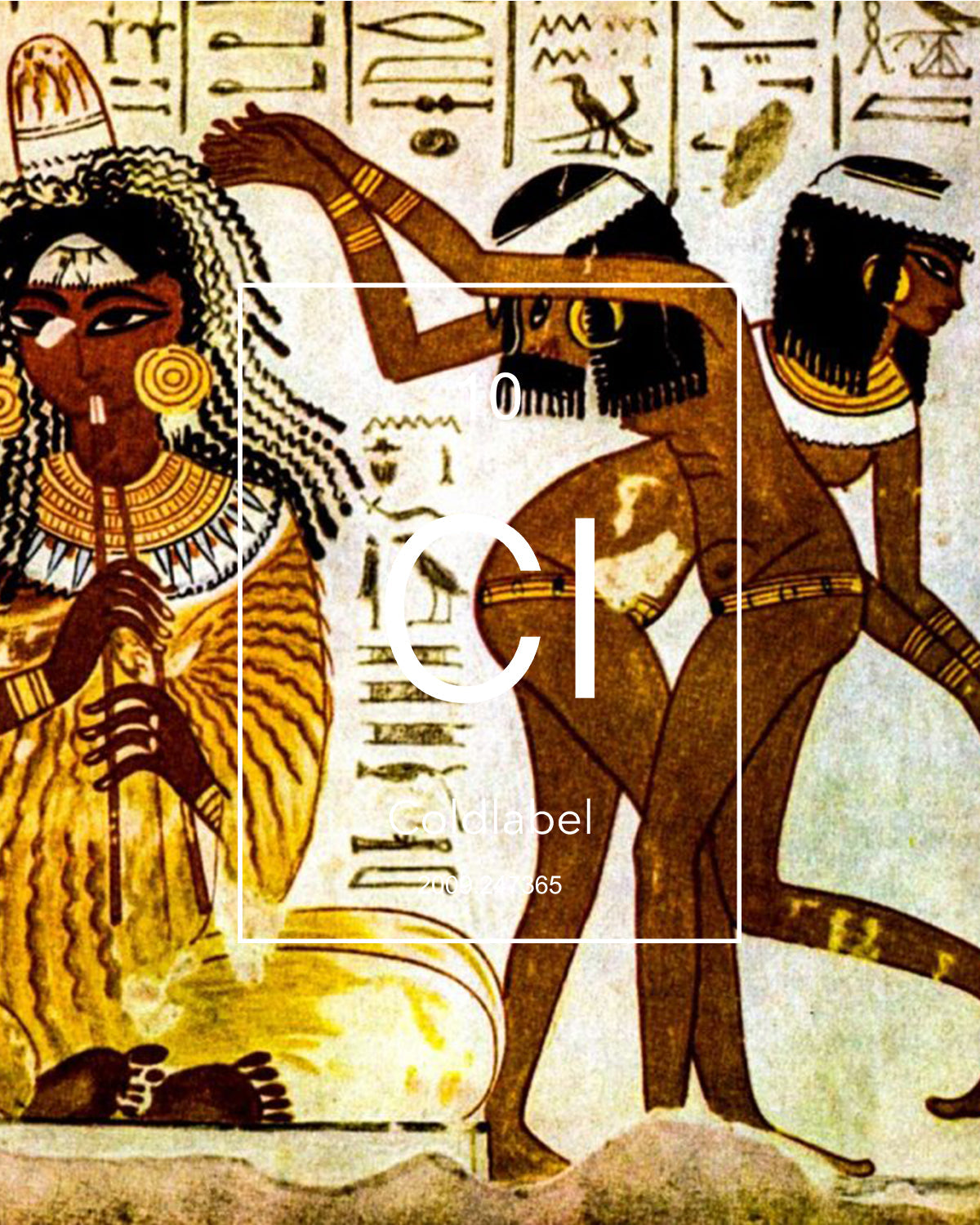
Hair and grooming had practical and cultural importance in ancient Egypt. Historical evidence shows elaborate hairstyles, braiding and the use of supplementary hair. Oils and unguents were also widely used cosmetically, particularly in response to Egypt's dry environment.

For hair, this general approach makes practical sense.
Oil does not literally hydrate hair because hydration refers to water. Instead, suitable oils can lubricate the hair fiber, improve slip and reduce some of the friction associated with handling and grooming.
This distinction matters for textured hair.
Curly and tightly coiled fibers have many points along their structure where mechanical stress can concentrate. Repeated aggressive combing, brushing or manipulation can therefore contribute to breakage.
Modern lesson: lubricate before manipulation
One ancient principle worth retaining is simple: do not repeatedly manipulate dry, resistant hair without adequate lubrication.
Modern versions might include applying a conditioner, leave-in product or small quantity of suitable oil before detangling.
The objective is not to coat the hair as heavily as possible. It is to reduce unnecessary friction.
Indian Hair Oiling Traditions
Among the world's most enduring natural hair care traditions is hair oiling across the Indian subcontinent.
Various traditions have incorporated coconut, sesame and other plant oils, sometimes infused with botanical ingredients. Hair oiling is also closely associated with Ayurvedic grooming practices, although traditional Ayurvedic claims should not automatically be interpreted as established dermatological evidence.

One ingredient, however, has attracted meaningful scientific interest: coconut oil.
Research examining different oils on human hair has found that coconut oil can penetrate the hair fiber and reduce protein loss under certain conditions. Its fatty-acid composition—particularly its high proportion of lauric acid—appears to contribute to its affinity for hair proteins.
That gives a traditional practice a plausible modern application.
Modern lesson: consider pre-wash oiling
For dry, porous or frequently washed hair, a modest coconut-oil pre-treatment may help reduce some washing-related damage.
A practical approach is to:
- Apply a small quantity primarily to the hair lengths.
- Distribute it evenly rather than saturating the scalp.
- Allow it to remain before washing.
- Shampoo according to your scalp's actual cleansing needs.
- Condition afterward as necessary.
People whose hair becomes stiff, weighed down or difficult to cleanse after oiling should reduce the amount or frequency.

African Hair Traditions: Protection, Braiding and Intentional Grooming
Across Africa, hair practices have historically varied enormously between regions and peoples, making it inaccurate to describe a single "African hair care tradition."
Still, braiding, threading, wrapping, sculpting and the use of plant-derived grooming materials have long histories in numerous African societies.
One lesson is particularly relevant to contemporary textured-hair care: hair preservation involves controlling mechanical stress.
A protective hairstyle can reduce daily manipulation when it is installed and maintained correctly. But "protective" is not an automatic property of braids, twists or covered styles.
Excessive tension can harm hair.
A truly protective approach should minimize pulling at the scalp and hairline, avoid unnecessary manipulation and allow proper cleansing and scalp care.

Modern lesson: protect without excessive tension
Protective grooming works best when the objective is preservation rather than maximum tightness.
The hairline should not hurt after styling. Persistent soreness, bumps, inflammation or noticeable thinning are warning signs rather than evidence that a style has been installed effectively.
Herbal Hair Care Across Cultures
Herbs have appeared in grooming traditions throughout Asia, Africa, the Middle East, Europe and the Americas.
Depending on region and period, botanical preparations have been used to cleanse, fragrance, condition, color or dress the hair. Henna is one of the best-known examples, with a long history of cosmetic use.
This history has helped inspire renewed interest in herbal rinses, botanical oils and plant-based scalp preparations.
But this is also where modern consumers should distinguish heritage from evidence.
Natural ingredients are chemically active substances. A plant being traditional does not guarantee that it will treat hair loss, eliminate dandruff or stimulate follicles.
Modern reviews of herbal approaches to hair loss have identified promising ingredients, but the quality of evidence varies considerably, and stronger clinical research is still needed for many botanical remedies.

Modern lesson: use herbs for appropriate purposes
Herbal hair care is best approached according to what an ingredient can reasonably accomplish.
Botanicals may contribute fragrance, conditioning properties, color, lubrication or other cosmetic effects. Claims involving treatment of hair loss, inflammatory scalp disease or other medical conditions require a much higher standard of evidence.
Scalp Care Was—and Still Is—Fundamental
Traditional grooming frequently involved more than simply dressing the visible hair. The scalp was cleaned, massaged, oiled, combed and inspected as part of the grooming process.
Modern scalp science reinforces the importance of paying attention to the skin underneath the hair.
The scalp produces sebum, sheds skin cells and accumulates sweat, environmental debris and grooming-product residue. It therefore requires regular cleansing.

The important lesson is balance.
A dry scalp is not necessarily the same thing as dandruff. Likewise, an itchy or flaky scalp should not automatically be treated by adding more oil.
Persistent itching, inflammation, scaling, sores or unusual hair loss can indicate conditions that require proper diagnosis.
The Ancient Principle of Grooming as Ritual
Perhaps the most useful lesson from ancient hair care traditions is not a particular ingredient.
It is the ritual itself.
Traditional grooming frequently involved deliberate sequences: cleanse, prepare, oil, comb, braid, wrap or protect. Hair was maintained repeatedly rather than ignored until significant damage appeared.
This approach aligns naturally with long-term hair health.
A modern ritual for textured hair might be:
- Cleanse the scalp according to actual buildup and oil production.
- Condition the hair to improve softness and manageability.
- Detangle carefully with adequate slip.
- Use a suitable oil or conditioning product where needed.
- Style without excessive tension.
- Protect the hair during sleep when friction is a concern.
- Repeat consistently instead of attempting to repair months of accumulated damage at once.
The strength of this approach is its simplicity.

What Ancient Hair Care Gets Right—and What Modern Science Adds
Traditional knowledge and modern science should not be treated as opponents.
Tradition provides generations of practical observation. Science gives us tools for testing mechanisms, effectiveness and safety.
The strongest modern natural grooming philosophy can use both.
Keep the enduring principles: gentle handling, plant oils where appropriate, scalp attention, protective styling, thoughtful cleansing and consistent ritual.
Leave behind unsupported assumptions.
More oil is not always better. "Natural" does not automatically mean non-irritating. Essential oils, fragrances, dyes and botanical extracts can trigger irritation or allergic contact dermatitis in some individuals.
Likewise, oils and heavy hair products can contribute to breakouts around the hairline in susceptible people.

A clean grooming philosophy should therefore mean intentional formulation and ingredient awareness, not simply the largest possible number of botanical ingredients.
A Modern Ritual Inspired by Ancient Hair Care Traditions
You do not need to recreate an ancient formula to benefit from traditional wisdom.
Instead, build a disciplined ritual around a few fundamentals.
Cleanse intentionally.
Wash often enough to remove sweat, excess oil and product buildup without treating aggressive cleansing as the goal.
Condition consistently.
Textured hair benefits from good lubrication and careful handling, especially during detangling.
Use oils strategically.
An oil should serve a purpose. It may reduce friction, improve feel, increase shine or provide useful pre-wash protection. It does not need to cover the scalp continuously.
Protect the fiber.
Reduce unnecessary heat, friction, harsh manipulation and excessive tension.
Pay attention to your scalp.
Do not repeatedly cover persistent itching, scaling or inflammation with additional oils. Determine the cause.
Choose ingredients deliberately.
Traditional ingredients can be excellent grooming materials, but evaluate them according to performance, tolerance and evidence rather than heritage alone.

Conclusion: Old Wisdom, Modern Standards
The lasting value of ancient hair care traditions is not the idea that everything old is superior to everything modern.
It is the recognition that healthy grooming has always required intention.
Ancient cultures used oils, herbs, braiding, wrapping and repeated grooming rituals to care for hair with the materials available to them. Modern science now allows us to understand some of those practices more precisely—and to recognize the limitations of others.
For curly, coily, wavy, thick and textured hair, the most useful lesson may be straightforward: protect what you have.
Cleanse the scalp thoughtfully. Keep the hair manageable. Reduce friction. Avoid unnecessary tension. Choose ingredients with purpose. Give the hair consistent attention before damage becomes severe.
That philosophy places substance over trends.
The products may change across centuries. The discipline behind good grooming does not.

Frequently Asked Questions
What did ancient cultures use for hair care?
Practices varied widely by region and historical period, but oils, plant materials, herbal preparations, braiding, wrapping, combing and other forms of protective grooming appear across numerous traditions. There was no single universal ancient hair-care routine.
Are ancient hair care remedies better than modern products?
Not automatically. Some traditional practices have sound practical or scientific reasoning behind them, while others lack strong modern evidence. A useful approach is to combine historically proven grooming principles with modern knowledge of hair biology, scalp health and ingredient safety.
Which traditional oil is best supported by modern hair research?
Coconut oil has comparatively good evidence for protecting the hair fiber. Research suggests it can penetrate the hair shaft and may reduce protein loss associated with grooming and washing. That does not mean it is ideal for every person or that it has been proven to stimulate hair growth.
Can traditional oils fix a dry or itchy scalp?
Not necessarily. Dryness is only one possible cause of scalp discomfort. Dandruff, contact dermatitis, psoriasis and other conditions can also produce itching or flaking. Persistent or severe symptoms should be evaluated rather than continually covered with oil.